Nic Salts or Freebase Nicotine? The Honest Answer Depends on What You're Actually After
Walk into any vape shop in the US right now and you'll find two distinct categories of e-liquid dominating the shelves: nicotine salt (nic salt) formulas and traditional freebase nicotine juices. Both contain nicotine. Both can taste incredible. But the experience they deliver is genuinely different, and picking the wrong one for your situation can leave you either underwhelmed or completely overwhelmed.
Let's get into the actual science, the real-world feel, and — most importantly — which one makes sense for different types of vapers.
The Chemistry Breakdown (Without the Headache)
Nicotine in its natural state is actually a salt — it bonds with organic acids in tobacco leaves. Freebase nicotine is what you get when that salt form is chemically treated to remove those acids, freeing the nicotine molecule and making it more volatile and bioavailable.
For decades, freebase was the standard in both cigarettes and e-liquids. Then, around 2015, Juul's team popularized a different approach: keeping the nicotine in its salt form by pairing it with benzoic acid. The result was a formulation that could deliver high nicotine concentrations without the brutal throat hit that makes high-strength freebase almost unvapable.
That's really the core of the difference. Nic salts are smoother at high concentrations. Freebase gets harsh as nicotine levels climb.
How Your Body Absorbs Each One
This part matters more than most people discuss. The speed at which nicotine reaches your bloodstream affects how satisfying — and potentially habit-forming — each format feels.
Freebase nicotine, because of its higher pH, absorbs efficiently through lung tissue but the absorption curve is relatively gradual. You feel the effect, but it builds over a few minutes.
Nicotine salts absorb faster. The benzoic acid in the formulation lowers the pH, which actually helps the nicotine cross into your bloodstream more quickly. Research suggests nic salts can produce a blood nicotine spike closer to what a traditional cigarette delivers — which is a significant part of why former smokers often find them more satisfying in the early stages of switching.
For someone actively trying to move away from cigarettes, that faster absorption can make a real difference in reducing cravings. For someone who's been vaping freebase for years and is trying to reduce their overall nicotine intake, it's worth being aware of.
Throat Hit: A Feature, Not a Bug
One of the most misunderstood aspects of freebase nicotine is its throat hit. In vaping communities, throat hit often gets treated like a flaw to be minimized. But for a lot of vapers — particularly ex-smokers — that sensation is part of what makes vaping feel satisfying and cigarette-like.
Freebase nicotine at 3mg to 6mg in a sub-ohm setup produces a noticeable, slightly scratchy sensation at the back of the throat. Some people love it. It mimics the feel of a cigarette draw in a way that nic salts, with their ultra-smooth delivery, simply don't replicate.
Nicotine salts at 25mg or 50mg are remarkably smooth. Almost too smooth, some freebase loyalists say. The lack of throat hit can feel oddly unsatisfying even when the nicotine dose is technically higher.
Neither experience is objectively better. It comes down to what you're looking for.
Device Compatibility: This Is Where People Make Mistakes
Here's a practical issue that trips up a lot of people: nic salts and freebase nicotine are not interchangeable across all devices.
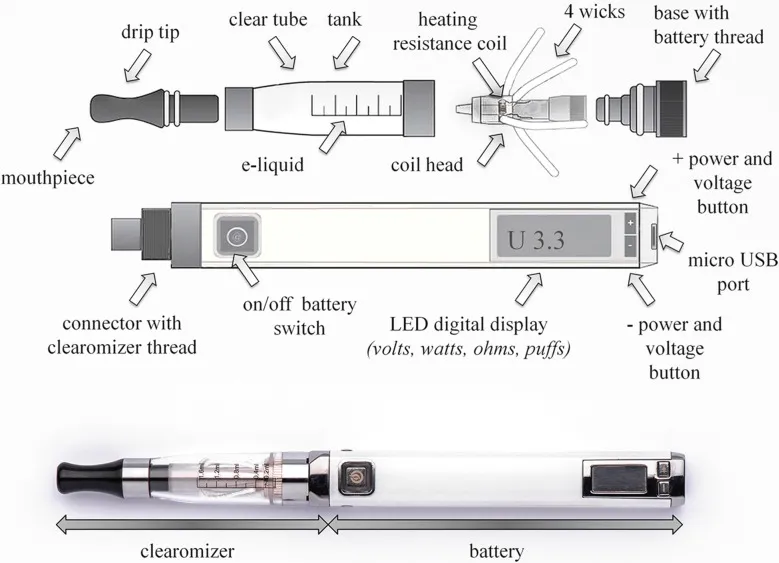
Nic salts are designed for low-wattage, high-resistance (MTL) devices — think pod systems like the Vaporesso XROS, the Uwell Caliburn series, or any small pod mod running coils above 1.0 ohm. These devices produce modest vapor at lower temperatures, which is exactly what you want with a 50mg nic salt. Running high-concentration nic salts through a sub-ohm tank at 80 watts would deliver a dangerous amount of nicotine per puff, fast.
Freebase nicotine, on the other hand, is built for sub-ohm tanks, rebuildable atomizers, and high-wattage box mods. The lower nicotine concentrations (3mg, 6mg, occasionally 12mg) are appropriate for the large vapor volume these devices produce.
Mixing these up — say, dropping a 50mg nic salt into a 100-watt sub-ohm setup — is a mistake you'll feel immediately and not pleasantly.
Matching the Formulation to Your Vaping Profile
Let's get practical. Here's how to think about which option fits you:
You just quit smoking (or are trying to): Nic salts are almost certainly your best starting point. The faster absorption, higher available concentrations, and smooth delivery closely mirror the nicotine experience of a cigarette. A pod system with 25mg to 50mg nic salt juice is what a huge portion of successful switchers rely on.
You've been vaping for a while and want big clouds/flavor: Freebase nicotine in a sub-ohm setup is your lane. The lower concentrations work perfectly with high-powered devices, and the flavor complexity of freebase e-liquids — especially in high-VG formulations — is hard to beat.
You're trying to reduce your nicotine dependence gradually: Freebase gives you more granular control over your nicotine levels (3mg, 6mg, 12mg steps are easy to find), making it easier to step down over time. Nic salts tend to come in fewer concentration options and the jumps between them are larger.
You vape on the go and want something discreet: Nic salts in a compact pod system win here. Small device, minimal vapor, high satisfaction. Perfect for office breaks, travel, or anywhere you don't want to be That Guy blowing clouds.
You care deeply about flavor complexity: This one's debated, but many experienced vapers feel that freebase e-liquids — particularly those crafted by boutique US juice brands — offer more nuanced flavor layering. The higher VG content common in freebase juices also produces a denser, more flavor-saturated vapor.
Common Misconceptions Worth Addressing
"Nic salts are safer than freebase." Neither has been proven safer than the other in the long term. The salt vs. freebase distinction is about delivery mechanics, not safety profiles.
"Freebase nicotine is outdated." Nope. Freebase remains dominant in the sub-ohm and enthusiast market, and for good reason. It's not going anywhere.
"You have to pick one forever." Plenty of vapers use both — a pod system with nic salts for everyday carry and a sub-ohm setup with freebase at home. There's no rule against it.
The Bottom Line
Nicotine salts and freebase nicotine serve different masters. Nic salts are engineered for efficiency — fast satisfaction, high concentration, smooth delivery, compact devices. Freebase is engineered for experience — rich flavor, vapor production, device flexibility, and gradual nicotine control.
If you're newer to vaping or making the switch from cigarettes, start with nic salts. If you're chasing flavor, clouds, or looking to dial down your nicotine over time, freebase gives you more tools to work with.
Either way, knowing why each formulation works the way it does puts you in a much better position to make a choice you'll actually stick with.